Over half a century ago, the Wankel Rotary Engine became the new phenomenon in the automotive industry. It was said to be a dream engine, the next big thing, the one that would replace the traditional reciprocating engine.
As a result, almost all big manufacturers from Germany, France, Italy, the United States, and Japan took out a license on the design (1). Even the Soviet Union joined the Wankel party (2). And the motorcycle industry? Well, they were just getting started.
But of all the rotary motorcycles that were either mass-produced or just ended up as a prototype, there was only one that had the potential to make a Wankel Motorcycle accessible for everyone.
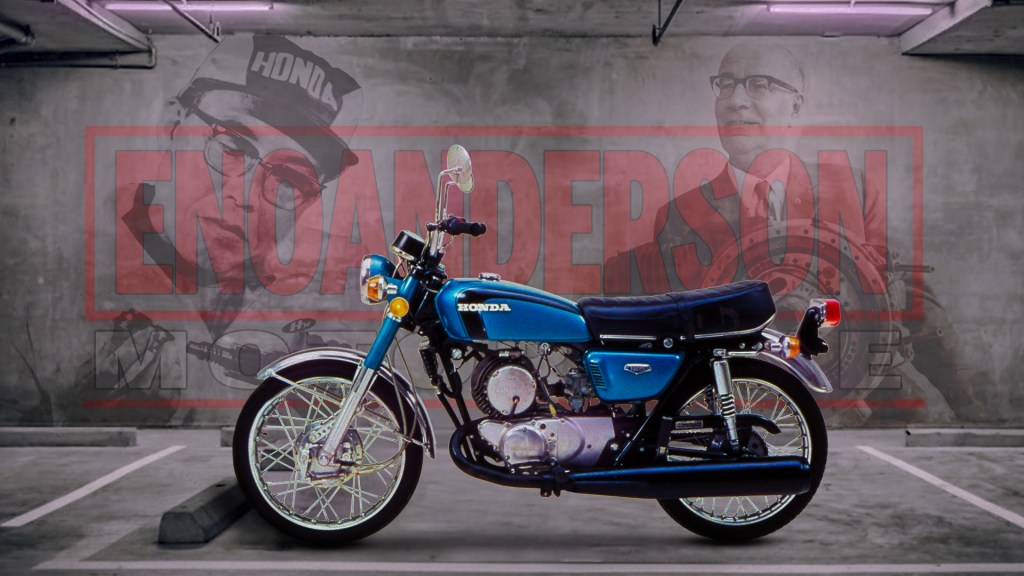
It was a blend of simplicity and low cost of a typical Honda CB125, with a potential of a lightweight and fun single rotor engine.
But weirdly, Honda didn’t want you to know about it.
HONDA & WANKEL ENGINE
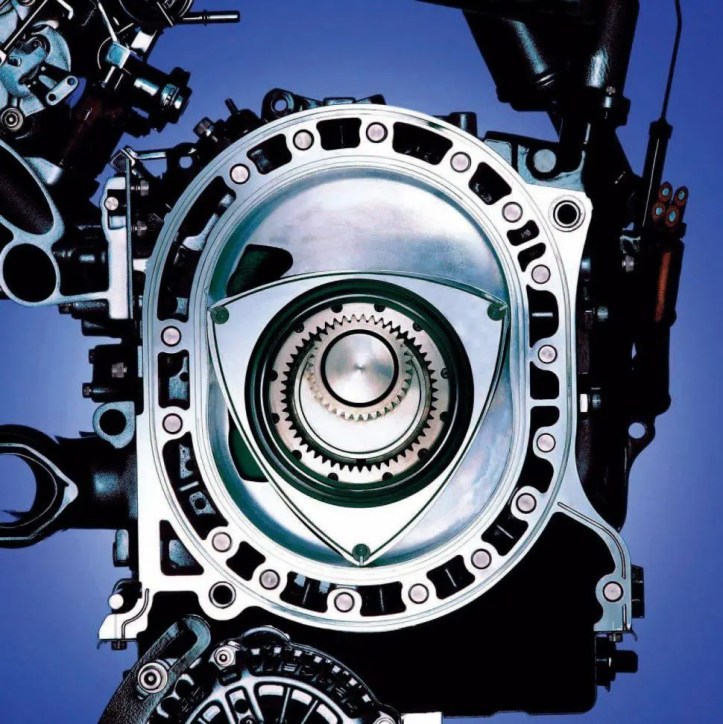
Speaking of the Japanese motorcycle industry and the Wankel Rotary Engine, Honda was – originally – the least expected to join the rotary craze.
Why? Because when it was first developed in the motorcycle industry, the Wankel Engine was seen as an alternative to the traditional 2-stroke and 4-stroke reciprocating engine.
Compared to a 4-stroke piston-driven engine with the same technology, the rotary engine had fewer parts, was much more compact, lighter, and could squeeze more horsepower from the same engine capacity. But it also had better efficiency, and was said to have less harmful emissions than the comparable two-stroke engines (1).
The emission part was the most important point. Because in 1966, the United States, as the largest market for a flagship bike at that time, began implementing emission standards for motor vehicles (3).
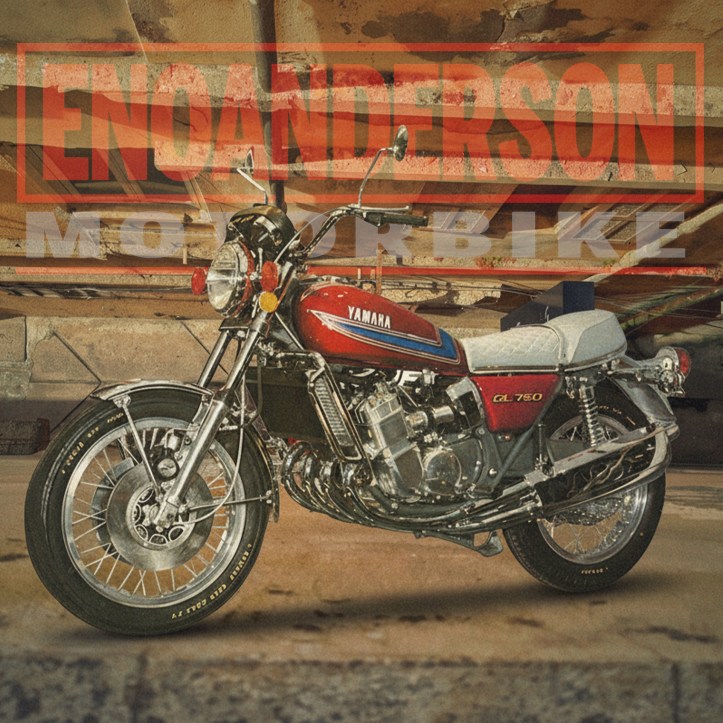
This was not-so-good news for Japanese manufacturers. Because in the late 60s, most of their flagship motorcycles had a 2-stroke engine. A bike such as the Kawasaki Mach IV, Suzuki GT750, or the newly developed Yamaha GL750 would have a tough time dealing with the strict emission tests.
That’s why almost all Wankel Motorcycles developed by the Japanese in the early 70s were specifically aimed for the top-of-the-line flagship class (4). They paid high licensing fees from NSU, because they believed the Wankel Engine was the next big thing.
But, there was one exception… HONDA.
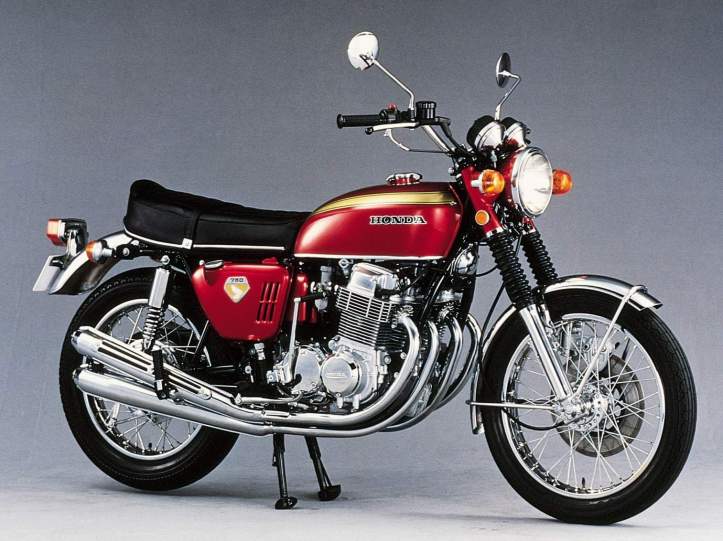
While other Japanese manufacturers were still looking for a powerful yet low-emission solution for their flagship superbikes, Honda had already found the answer. And not just an answer, it was the best-selling flagship model at the time (5), and also is regarded as the first motorcycle to be called a “superbike.” (6)
It was the original Honda CB750 Four.
The question is: If Honda already had the CB750, along with their fantastic 4-Stroke technology from Grand Prix racing, why would they develop a Wankel Engine?
Well, who said Honda was going to replace the CB750?
HONDA A16/24

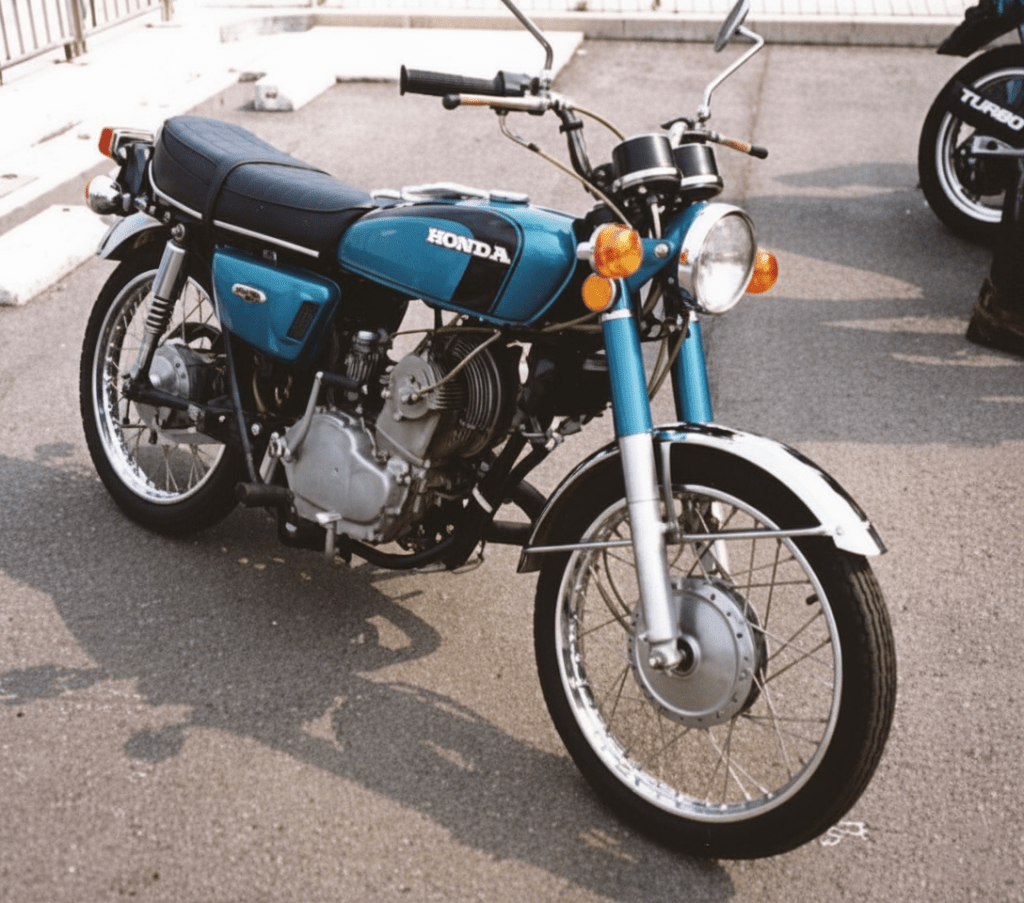
This is the Honda A16/24. The only Wankel motorcycle ever produced by the Japanese giant. As you can see, even though it had characteristics of the typical CB-series, it clearly wasn’t built to replace the super-popular CB750.
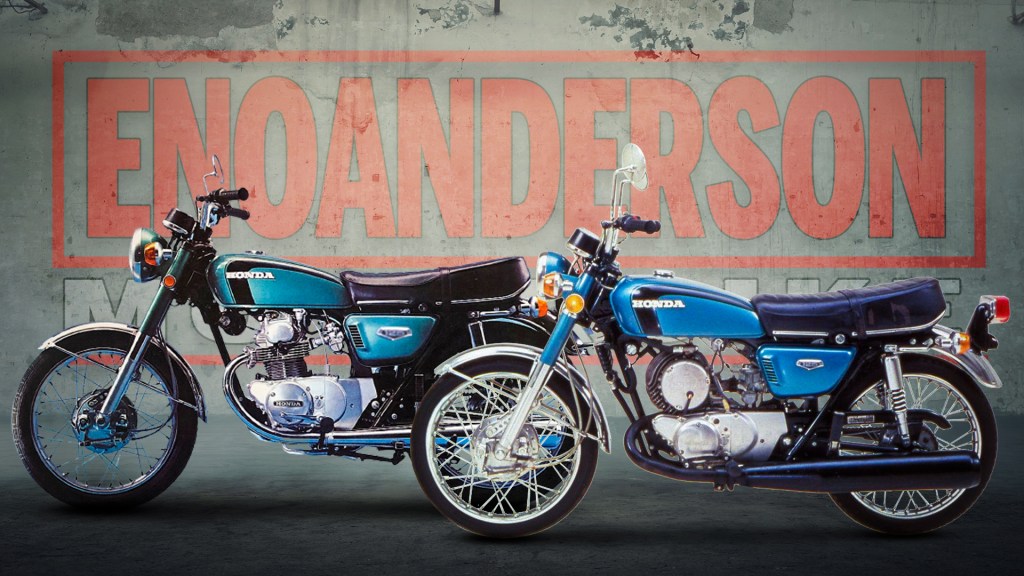
The Honda A16 was actually developed using the CB125 K5 platform. By the looks of the specs and paint job, this prototype looks to have been built around 1972-1973.
The difference is, while the conventional CB125 uses a 125cc twin-cylinder engine with a 360-degree crank configuration, the A16/24 version uses a single-rotor Wankel Engine. And unlike Yamaha, Suzuki, or Kawasaki, which paid a high amount of licensing fees, Honda, meanwhile, developed this rotary engine without an official license from NSU. (7)
From a technical perspective, this single-rotor rotary engine is actually the perfect recipe to replace the twin-cylinder engine in the conventional CB125.
First, a single-rotor engine has the potential to be lighter than a conventional twin-cylinder. Next, in one full cycle of a 4-Stroke reciprocating engine, this Single Rotor engine has the exact same combustion timing as a 360-degree crank Twin Cylinder engine.
And the third one, it just sounded better.
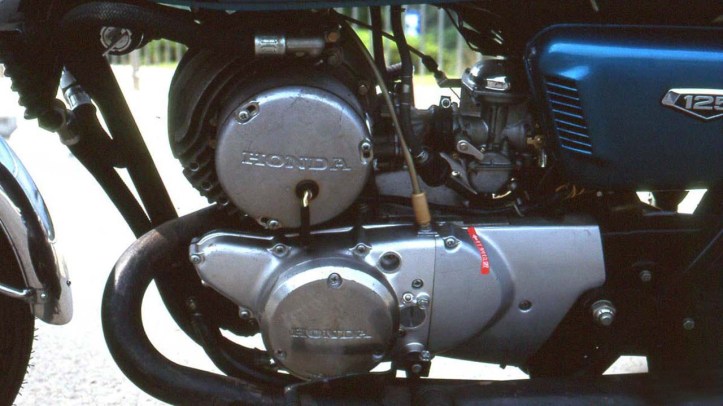
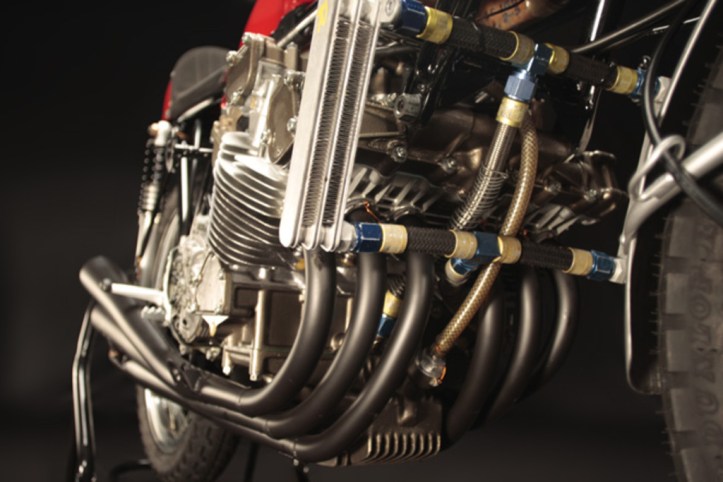
Detailed technical data for this Honda Rotary engine is actually very, very limited. However, by looking at it visually, we can analyze that this engine uses a Single Rotor with the KKM configuration developed by Hans-Dieter Paschke, which is simpler than Felix Wankel’s earlier DKM configuration.
For the fuel supply, Honda uses a Keihin 722A carburetor, the same carburetor as on the CB350 Twin. This carburetor is actually a 32mm Constant Velocity type, not a conventional slide carburetor.
The mixture of air, fuel, and two-stroke oil that enters via the carburetor is then compressed by the rotor’s rotation, and then ignited by two spark plugs. Next, the exhaust gases remaining from the combustion are released through the exhaust port, which is hidden between the rotor housing and the crankcase.
Unlike the rotary engines made by Suzuki, Yamaha or Kawasaki which use a huge radiator to cool the notoriously hot-running Wankel design, Honda still uses air and a small oil cooler for their engine. Besides the simplicity and low cost factor, the air cooling option was chosen because, in the late ’60s to early ’70s, Honda was actually in a dilemma.
Their founder, Soichiro Honda, was adamant about continuing to develop air-cooling technology. Meanwhile, Honda engineers believed that a water-cooled engine had more potential. This clash of ideologies was a lengthy one, until 1975, when Honda-san finally conceded. (8)
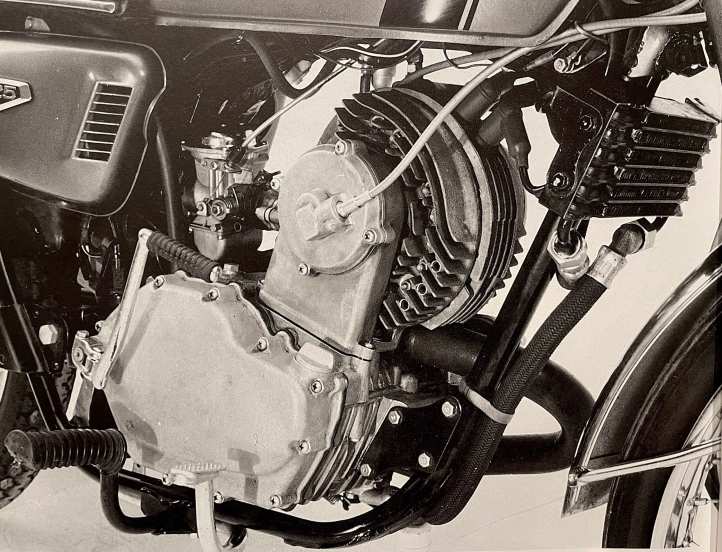
The rotor housing of this Wankel engine looks integrated with the upper crankcase of the CB125. It was then bolted into the lower crankcase and a side case that looked very similar to the original CB125.
The eccentric shaft and the “fake” crankshaft from the original CB125 look connected using a chain drive. The power is then transferred to the clutch, gearbox, and then to the final drive and finally, to the rear wheel.
The engine was then installed in a chassis that also looked very similar to the CB125. And sadly, this is also the part where the hope of its production version started to fade away.
WHY IT WAS ABANDONED?
If you read this article carefully, there are actually several signs i’ve already mentioned that led to this rotary-powered Honda becoming abandoned.
First, instead of developing a new compact engine with a simpler layout, this prototype engine looked like it was forcefully adapted to the CB125 platform, to the point that it was just too much. If mass-produced, the high position of the rotor housing would probably mess up with the center of gravity.
Second, with a chamber capacity of 125cc, plus a compression ratio of 8,5:1, the rumored power output was only about 13.5 HP (9). This is actually less powerful than the original CB125 version (10). To add insult to injury, the original CB125 doesn’t require the hassle of mixing oil, plus it has been proven reliable for about 10 years.
Third, and the most obvious one, is that Honda developed the A16 engine without paying a license fee to NSU, which holds the patent for the Wankel Engine. That means Honda couldn’t mass-produce the engine.
That’s also why the existence of the Honda A16 has been highly confidential until now. Heck, even Honda itself has never made an official statement about their rotary-powered motorcycle.
The only time Honda displayed this motorcycle to the public was at an internal company event in 2000 (11), which is also the source of the exclusive photos circulating on the internet. They even refused to provide extra photos specifically to the media that were covering the event at the time.(12)
The only time You know, because of the legal stuff.
But the main reason why this bike wasn’t mass-produced is… Well, why bother?
Because compared to the other Japanese compatriots – in the late ’60s to early ’70s – Honda was already considered as the master of the 4-Stroke engine.
In fact, their founder was so obsessed with the 4-stroke engine, that Honda was the only manufacturer brave enough to spend hundreds of millions of yen for their 4-stroke Grand Prix program.
And they even successfully beat the 2-stroke racers from the golden era! Though they did have some spectacular failures, too.
So, while many manufacturers were looking for alternatives for newer low-emission engines with potential power output, Honda already had the answer. And, even better, because they didn’t need to pay any licensing fees, and also didn’t need to deal with the infamous apex seal problem from the 70s Wankel Engine. (1)
The era when rotary engines were booming in Japan was actually looked very similar to what is happening with EVs lately. Japanese manufacturers seem to be hesitant about producing electric vehicles.
The reason? They likely still have faith in existing internal combustion technology. Instead, they choose to develop them further into Hybrids, Hydrogen Fuel, and so on.
But that doesn’t mean they aren’t making EVs at all. No matter how confident a manufacturer is, they still need to be very adaptive to new trends and technological advancements. Because if not, when the era does shift so quickly, they will be gone. Just like Nokia.
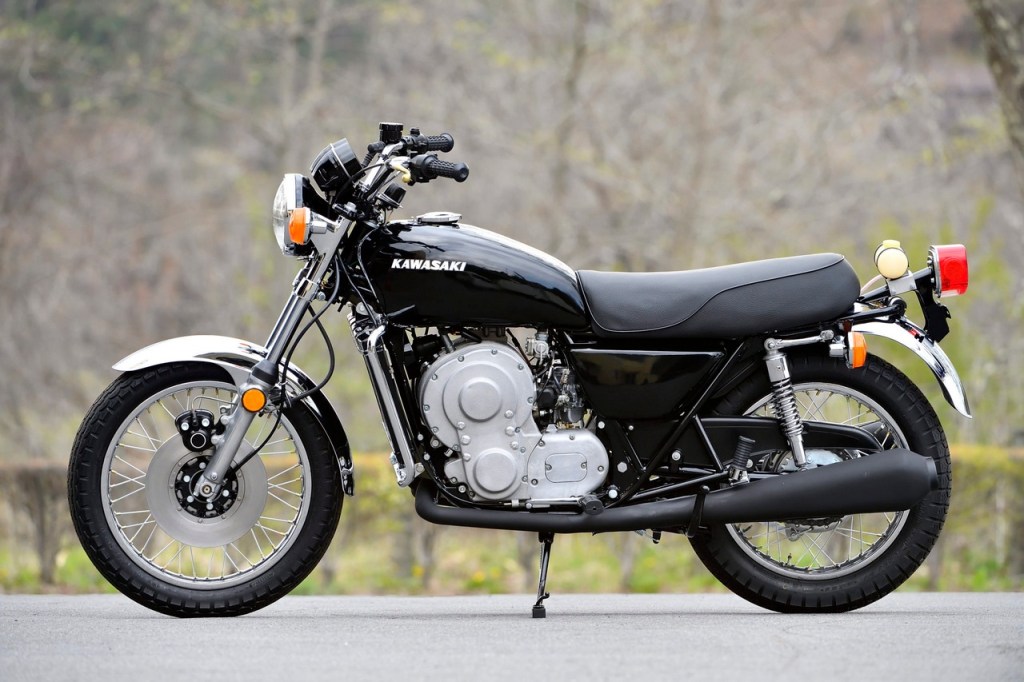
That was also what happened in the early ’70s when Yamaha, Kawasaki, and Honda tried to build motorcycles with a Wankel engine. Even though it only ended as a Proof of Concept, at least they had their own research regarding the advantages and disadvantages of that technology.
Because whether you are in the EV camp, the Wankel Engine camp, the conventional 4-Stroke camp, or even the 2-Stroke camp, we all agree that major change requires massive energy and resources. And unfortunately, not all manufacturers are willing to bet on their financial status for that change.
Because this is also what happened after Honda abandoned their Wankel Engine project.
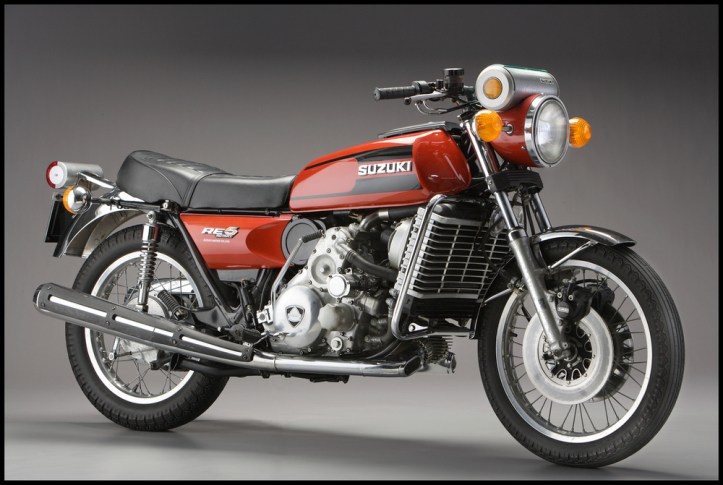
Just a couple of months after Honda decided to no longer continue the rotary project, suddenly, a new wankel-powered flagship superbike caused a stir at the 1973 Tokyo Motor Show. It was called the Suzuki RE5.
If you follow the automotive industry closely, you probably already know the impact when Suzuki gambled on developing the Wankel engine for their Superbike… I’ll give you a hint: they almost went bankrupt!(13)
So… the plus side is that by abandoning the Rotary Engine project, Honda successfully avoided financial problems like those experienced by Suzuki and several other manufacturers who also gambled on the Wankel Engine platform.
But the downside is that with a major manufacturer like Honda leaving the Rotary engine hype, the refinement of this engine in terms of performance, production cost, and efficiency would take a much longer time. Much longer than Felix Wankel and the Engineers at NSU imagined when they created this engine.
WATCH THE HONDA A16/24 VIDEO ON YOUTUBE
Reference:
- https://en.wikipedia.org/wiki/Wankel_engine
- https://www.jalopnik.com/the-soviets-made-fast-ish-rotary-powered-ladas-for-the-1850125728/
- https://ww2.arb.ca.gov/about/history
- Yamaha News Magazine – November 1972 Edition
- https://www.bikeexif.com/gooding-geared-online-2024
- https://en.wikipedia.org/wiki/Honda_CB750_and_CR750
- https://bike-lineage.org/etc/bike-trivia/rotary.html
- https://global.honda/en/heritage/episodes/1968honda1300.html
- https://thevintagent.com/2011/11/03/a-short-history-of-wankel-motorcycles/
- https://www.motorcyclespecs.co.za/model/Honda/honda_cb125_72.html
- http://gin-en-shokai.com/dorisai2000.htm
- Old Timer Magazine Japan – 22th Edition
- https://www.rideapart.com/features/719146/suzuki-re5-rotary-wankel-video/
 ENOANDERSON - Motorbike